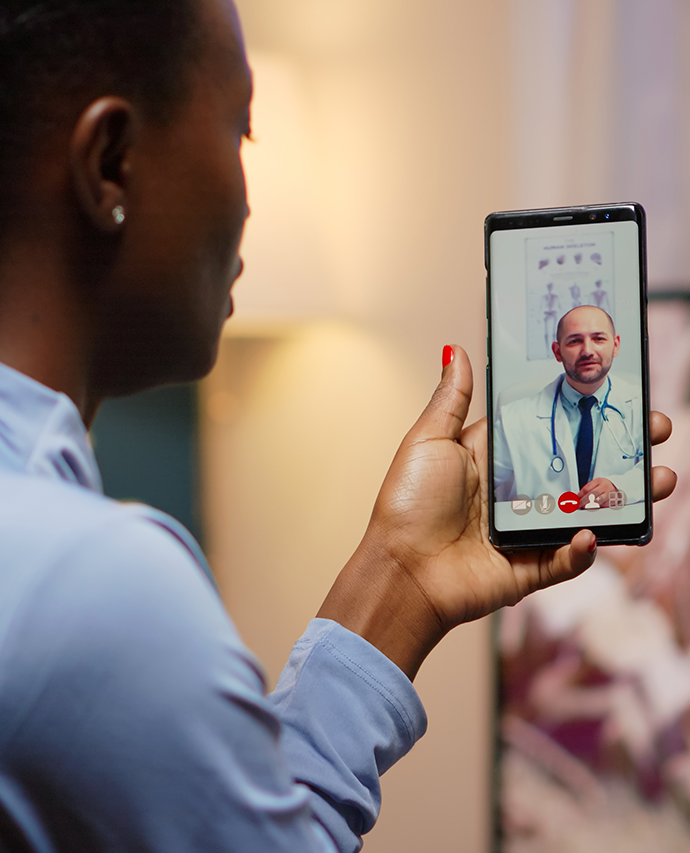
Live (synchronous) videoconferencing is a two-way audiovisual meeting between a patient and a care provider delivering services in real-time. This allows the health practitioner and patient to discuss medical conditions and provide appropriate treatment through video conferencing.
Patient’s access to healthcare specialists, especially those in rural areas
Decreased wait time to see a provider
Convenience due to lack of commute
Decreased number of no-show appointments
Mitigate exposure of disease
Triage of patient symptoms has been shown to reduce overtaxing of emergency rooms
Research on video healthcare visits (telemedicine) shows positive patient outcomes, time efficiency, and cost-effectiveness for both the medical professional and patient (Mallow et al., 2017).
Challenges
Smooth video conferences necessitate that the health provider and the remote site both have adequate internet bandwidth, reliable
HIPAA-compliant software, and trained providers.
While telemedicine can be set up to be an uncomplicated service, providers need training on video etiquette, security, and emergency
management (Slovensky, Malvey, & Neigel, 2017).
In addition, connectivity still poses a challenge for some patients in rural areas. However, some software made for telemedicine operates on lower bandwidth and is adequate for these areas.
Equipment
With the use of HIPAA-compliant software, video sessions can be performed on most laptops, tablets/iPads or smartphones that have an
embedded video camera.
To achieve a smooth video conferencing experience, there are basic technical requirements both the health provider and patient need to have Khosla, 2020). These include:
Stable internet connection, high speed will create a better experience
Computer or smartphone
Microphone or earphones
Video camera
Telemedicine software (for the physician only)
Online communication platform
Interacting through technology is obviously different from a face-to-face meeting and plays into the patient experience with telehealth. As
such, the term “web-side manner” has come into existence and describes the approach a provider should use while conducting a telehealth visit. Following is a short video that highlights best practices when using video conferencing:
Reimbursement
Understanding the Reimbursement Policies for Synchronous Telehealth Sessions Centers for Medicare & Medicaid Services (CMS) has widened its guidelines in accessing telehealth because of the COVID-19 outbreak (CMS.gov). It aims to help Americans receive health care services despite the difficulties the virus causes. The 2021 Final Rule can be found here and it also gives clarity to providers about reimbursement when offering a telehealth service.
Understanding the reimbursement policies for telehealth helps medical practitioners know the extent of service they will deliver to their
patients. It also aids them in getting a better picture of how much coverage the federal and private health programs can provide to their
beneficiaries. Health professionals might need the help of lawyers for more legal guidance on these telehealth reimbursement policies.
Examples of NC sites using synchronous videoconferencing include: